
Research Recherche
2025
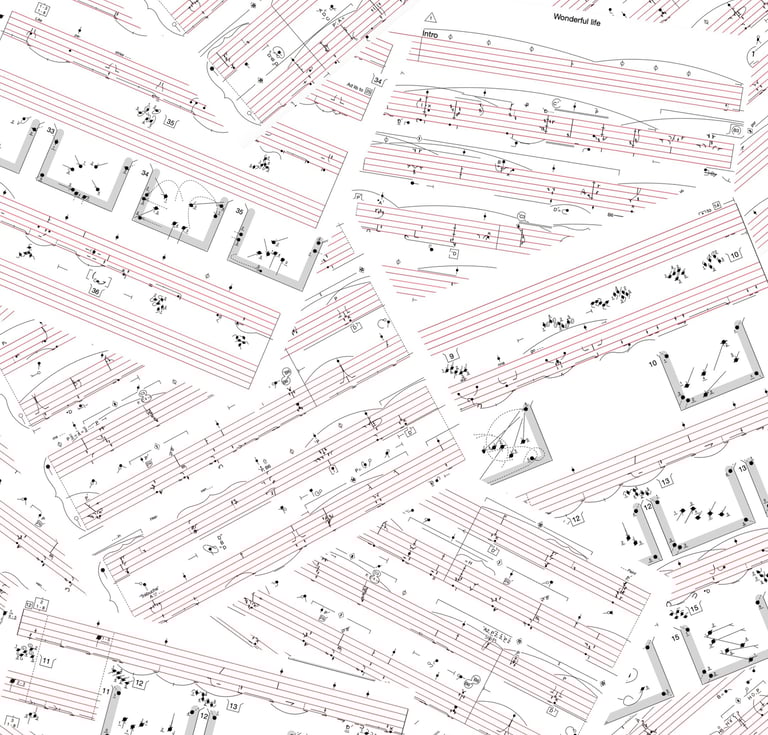
Writing of the score of Rodolpho Leoni's piece Wonderful Life in Benesh Movement Notation
(Master's degree, Conservatoire National Supérieur de Musique et de Danse de Paris)
Rédaction de la partition de la pièce Wonderful Life de Rodolpho Leoni en Notation Benesh
(Master, Conservatoire national supérieur de musique et de danse de Paris)
Navigating Creation: The Plural Role of the Freelance Choreographer,
Symposium AR@K 2025 Truth, reality and artistic invention, Kristiania University of Applied Sciences in Oslo (Oslo, Norway),
Knowing in Motion. Dance, Body, Archive, Witness Royal Danish Library's dance archives come alive – and trace the embodied knowledge of dancers,
ViBe, Royal Danish Library (Danemark),
Erasing the Gap: The Artist as Their Own Archivist,
Symposium Building bridges by SIBMAS, Theatermuseum Düsseldorf & Deutsches Tanzarchiv Köln (Germany),
Mapping the Hidden: Movement notation as a mean of unveiling invisible choreographic labor,
Benesh Congress 2025, Royal Academy of Dance (London, United Kingdom),
Publication Do not take the sound of your shower for granted, interview for the journal NOIES (Köln, Essen, Germany).
Contribution to Moderner Tanz – Revisited, edited by Miriam Althammer, Anja K. Arend and Eike Wittrock (Germany).
Dancing with the Lion - Teil 3
2025
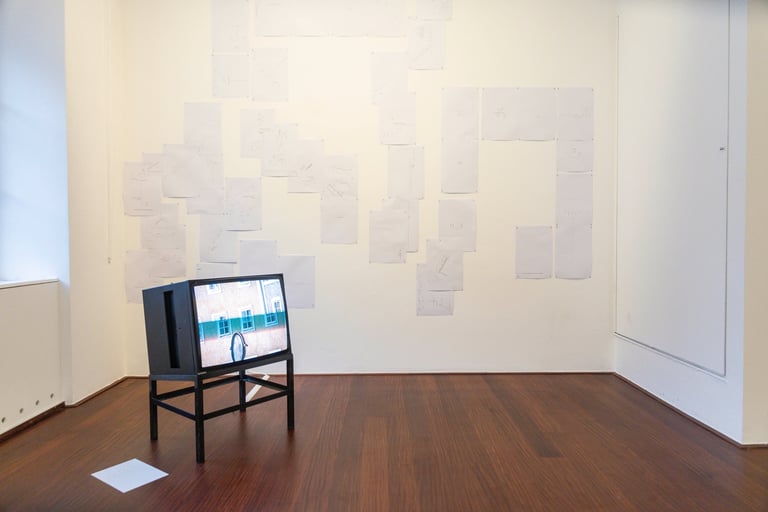
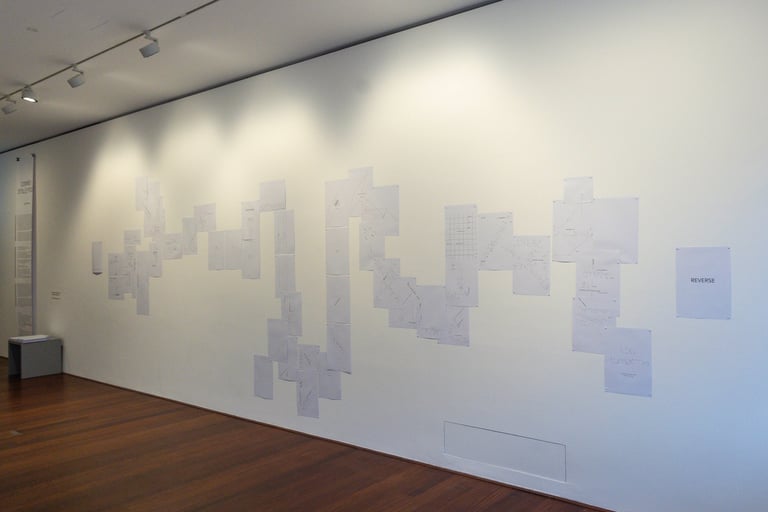
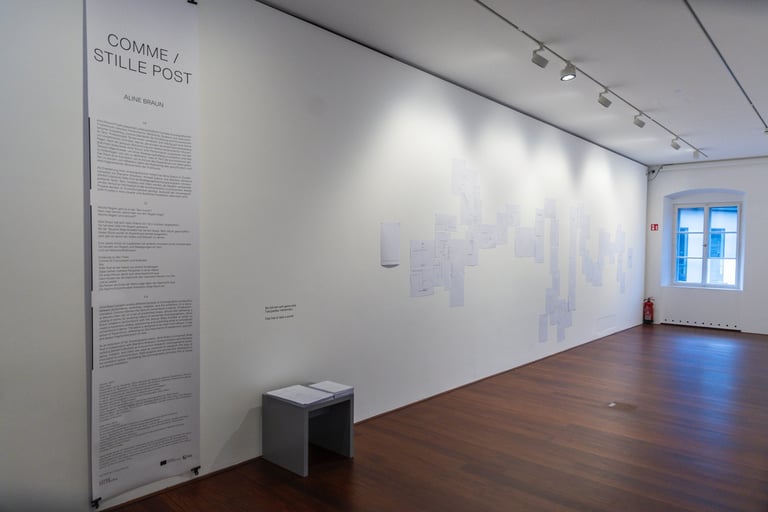
Curators | Curateurs : Stefanie Grünangerl, Jürgen Tabor
Head of the PhD in the Arts, Mozarteum University, Salzburg | Responsable du doctorat en arts de l'Université Mozarteum de Salzbourg : Ana Hoffner, Professor for Artistic Research
Artists (PhD candidates in the arts) | Artistes (doctorants PhD in the Arts) : Jo/Joseph/Josephine Baan, Johanna Binder, Aline Braun, Agata Cieslak, Renato Grieco, Lisa Großkopf, Rebecca Kressley, François Lemieux
COMME
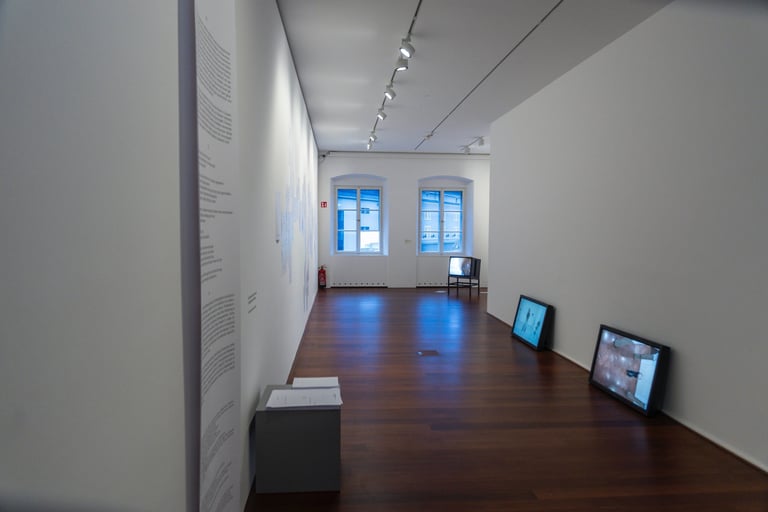
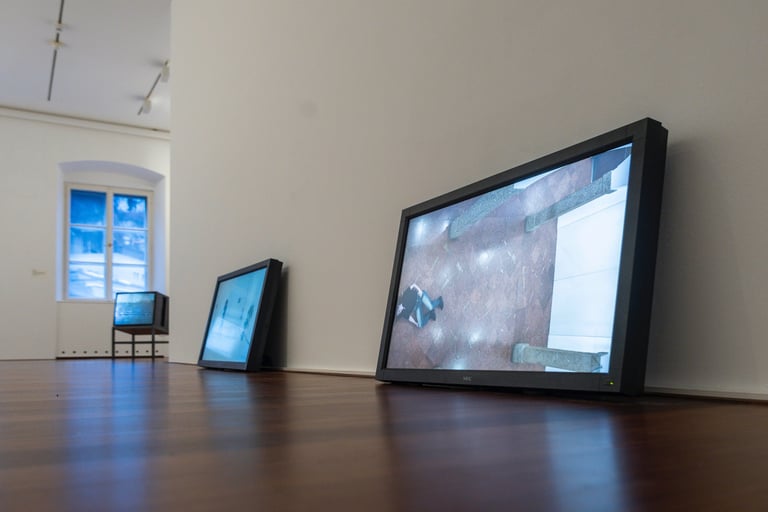
Video documentation (color, no sound) of rehearsals at Neue Musik Zentrale, Essen, DE
Documentation vidéo (couleur, sans son) des répétitions à la Neue Musik Zentrale, Essen, Allemagne
Video documentation (color, no sound) of the performance on November 21, 2024, Museum der Moderne Salzburg, Rupertinum, atrium
Documentation vidéo (couleur, sans son) de la représentation du 21 novembre 2024, Museum der Moderne Salzburg, Rupertinum, atrium
20 Min. | min.
Choreography | Chorégraphie : Aline Braun
Dancer | Danseuse : Maja Kowalik
Camera | Caméra : Arnaud Dubois, Lisa Großkopf
Stille Post
Video created by Arnaud Dubois on a score by Blandine Brasseur from a choreography by Aline Braun performed by Mariane Verbecq (color, no sound)
Vidéo réalisée par Arnaud Dubois sur une musique de Blandine Brasseur, d'après une chorégraphie d'Aline Braun interprétée par Mariane Verbecq (en couleur, sans son)
1 Min. | min.
Camera | Caméra : Arnaud Dubois
Dancing with the Lion, exhibition view, Museum der Moderne Salzburg, 2025 © Museum der Moderne Salzburg, photo: wildbild/Herbert Rohrer
Museum der Moderne Salzburg
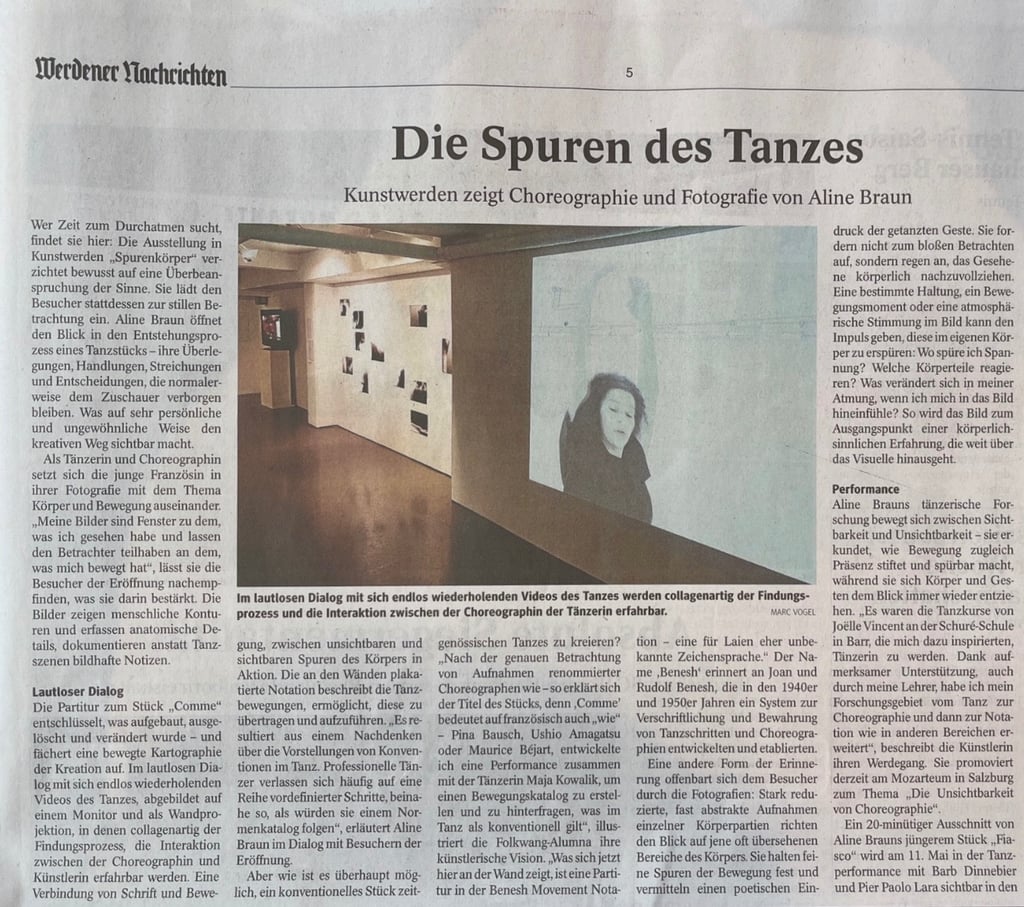
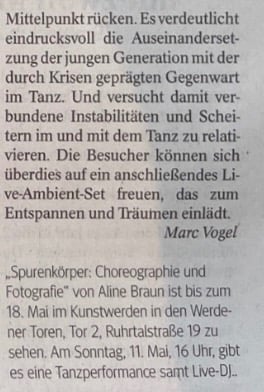
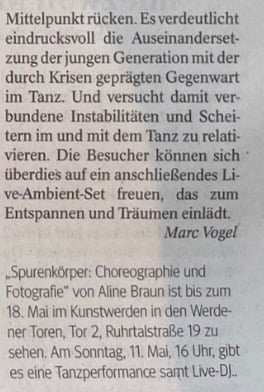
Werdener Nachrichten, Essen
April | Avril 2025
"13.04.2025 – 18.05.2025
Eröffnung: Sonntag, 13. April 2025, 16 Uhr
Tanzperformance und Live-Ambient Set: Sonntag, 11. Mai 2025, 16 Uhr
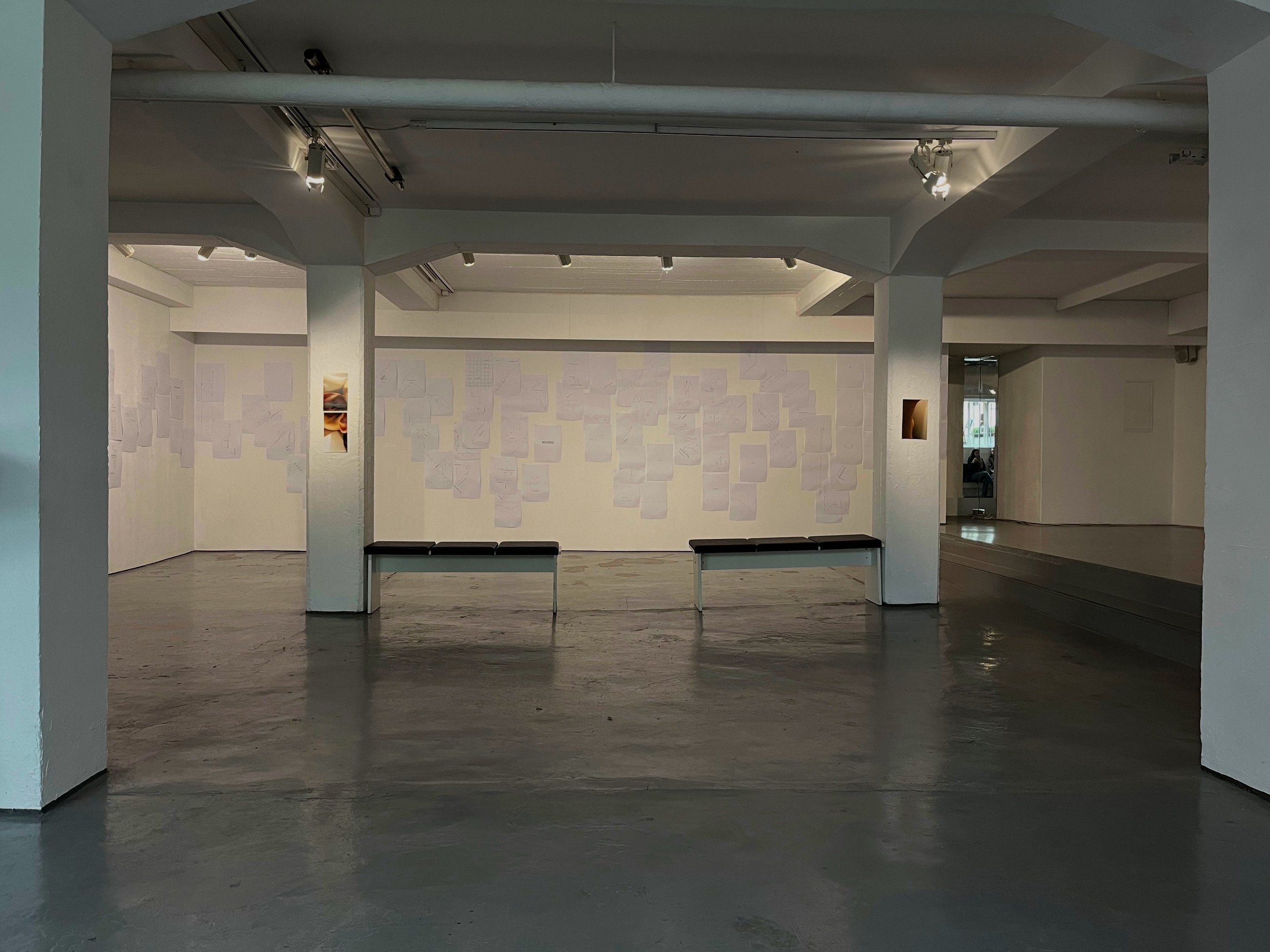
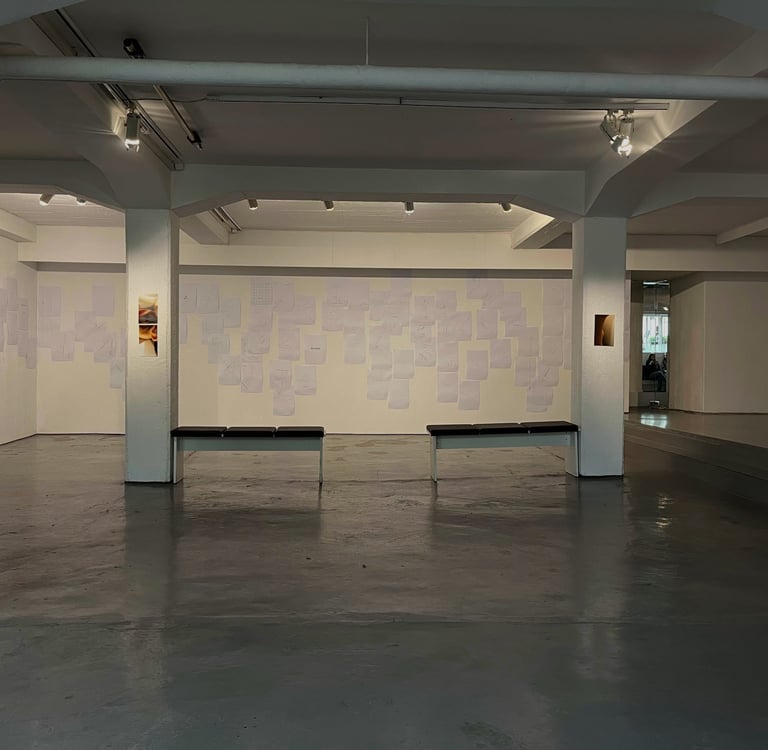
Die neue Ausstellung unter dem Titel SPURENKÖRPER enthüllt die Intimität choreografischer Überlegungen, Aktionen, Verwerfungen und Findungen. Ein kreativer und produktiver Prozess, in den man selten einen Einblick erhält. Die junge Französin Aline Braun macht diesen auf ihre Art und in ihrem Verständnis transparent und für uns Außenstehende auf unkonventionelle Weise erfahrbar. Untypische grafische Partituren laden beispielsweise durch ein rhythmisch angelegtes Raster ein, den intimen choreografischen Prozess zu erspüren. Sie zeigt darin auf, dass diese Partituren keine starren Leitfäden darstellen, vielmehr offene Fenster sind – vom choreografischen Erstgedanken und über Gespräche zwischen der Choreografin und der Tänzerin, die das Stück hervorgebracht haben. Die Partituren zeigen, was aufgebaut, ausgelöscht und verändert wurde – und fächern eine bewegte Kartografie der Kreation auf."
SPURENKÖRPER
Kunstwerden, Essen
BOOK REVIEW CRITIQUE
Caring infrastructures
Transforming the Arts through Feminist Curating
By Sascia Bailer
"Caring Infrastructures: Transforming the Arts through Feminist Curating attempts to articulate an alternative roadmap for curating with care by critically engaging with care on thematic, representational, and (infra)structural levels – in discourse and in practice." (13)
In her book Caring Infrastructures: Transforming the Arts through Feminist Curating, Sascia Bailer creates an otherwise: not a utopia, not a dream of what care could be, but a practical guide that helps navigate the different layers of care. In a climate marked by the rise of new care-centered discourses, her book is a necessary read.
As a curator, researcher, caregiver, and mother, Bailer occupies multiple roles that allow her to address care in this practice-based research from different angles, always from a counter-hegemonic perspective. In Caring Infrastructures, feminist care is used as a methodological framework for the research, and by quoting various authors, activists, curators, and artists, she creates an ecosystem of resources that enables a feminist theoretical landscape to emerge and provides tools for the reader to prolong these discussions on care.
In a society where care is often rendered invisible and remains unpaid, the question of the responsibilities of curating and infrastructures is central. Bailer therefore proposes a shift toward the concept of “caring infrastructures” (24) and opens possibilities for enacting caring infrastructures as "a lived practice of care within the arts” (224). However, aware that a conceptual shift does not necessarily entail a structural or concrete transformation within existing infrastructures, Bailer offers a “soft manifesto for caring infrastructures”(269), accompanied by concrete and hands-on propositions. Caring infrastructures is not only conceptual work but also a form of (micro-)politics, challenging the status quo of infrastructural and care practices.
Perhaps one of Bailer’s questions can serve as a starting point: Who cares for the ones who care for others?
A.Braun, 2025
Infos:
Bailer, Sascia. Caring Infrastructures: Transforming the Arts through Feminist Curating. Bielefeld: transcript Verlag, 2024.
https://www.transcript-verlag.de/978-3-8376-7545-0/caring-infrastructures/
« Caring Infrastructures: Transforming the Arts through Feminist Curating tente d’élaborer une feuille de route alternative pour un commissariat fondé sur le care, en abordant celui-ci de manière critique aux niveaux thématique, représentationnel et (infra)structurel — à la fois dans le discours et dans la pratique. » (13)
Dans son livre Caring Infrastructures: Transforming the Arts through Feminist Curating, Sascia Bailer crée un « autrement » : ni une utopie, ni un rêve de ce que le care pourrait être, mais un guide pratique permettant de naviguer entre les différentes strates du care. Dans un contexte marqué par l’essor de nouveaux discours centrés sur le care, cet ouvrage constitue une lecture essentielle.
En tant que commissaire d’exposition, chercheuse, aidante et mère, Bailer occupe plusieurs rôles qui lui permettent d’aborder le care, dans cette recherche fondée sur la pratique, sous différents angles, toujours depuis une perspective contre-hégémonique. Dans Caring Infrastructures, le care féministe est mobilisé comme cadre méthodologique de recherche et, en convoquant les voix de nombreuses autrices, activistes, commissaires et artistes, elle construit un écosystème de ressources qui fait émerger un paysage théorique féministe tout en offrant aux lecteur·ices des outils pour prolonger ces réflexions sur le care.
Dans une société où le care est souvent invisibilisé et demeure non rémunéré, la question des responsabilités du commissariat et des infrastructures devient centrale. Bailer propose ainsi un déplacement vers le concept d’« infrastructures du care » (« caring infrastructures ») et ouvre des pistes pour mettre en œuvre ces infrastructures comme « une pratique vécue du care dans le champ artistique » (224). Consciente toutefois qu’un déplacement conceptuel n’entraîne pas nécessairement une transformation structurelle ou concrète des infrastructures existantes, Bailer élabore un « manifeste souple pour des infrastructures du care » (« soft manifesto for caring infrastructures », 269), accompagné de propositions concrètes et directement applicables. Les infrastructures du care ne relèvent donc pas uniquement d’un travail conceptuel, mais aussi d’une forme de (micro-)politique, remettant en question le statu quo des pratiques infrastructurelles et du care.
Peut-être qu’une des questions posées par Bailer peut servir de point de départ : qui prend soin de celles et ceux qui prennent soin des autres ?
A.Braun, 2025
Facets of good news: perspectives on the UNESCO intangible heritage
Symposium der Gesellschaft für Tanzforschung (Un-)Sichtbarkeiten - Moderner Tanz Re-Visited (Essen, Germany),
Spatial views
Colloque - Festival international "(Nouvelles) épidémies dansantes. Danse par/pour tou·te·s ?" (Charleroi, Belgium),
Research Competition Mozarteum (Salzburg, Austria).
2024
2023
Tomlinson’s Gavotte in three scores
Congrès Benesh International BenMove (Paris, France) and at Folkwang University (Essen, Germany).
2022
Different tracks for one and the same piece. A comparison of two scores of “Der Grüne Tisch” for the Ringvorlesung SCORES Zwischen Dokumentation, Vermittlung und Kreation,
Contribution to Scores - Zwischen Dokumentation, Vermittlung und Kreation, edited by Miriam Althammer, Anja K. Arend, and Anna Wieczorek (Hg.) (Germany).
Interview for the podcast Paroles en mouvement, A. Miljanovic (Paris, France).
2021
braunaline@live.fr
© 2025. All rights reserved.
CONTACT